
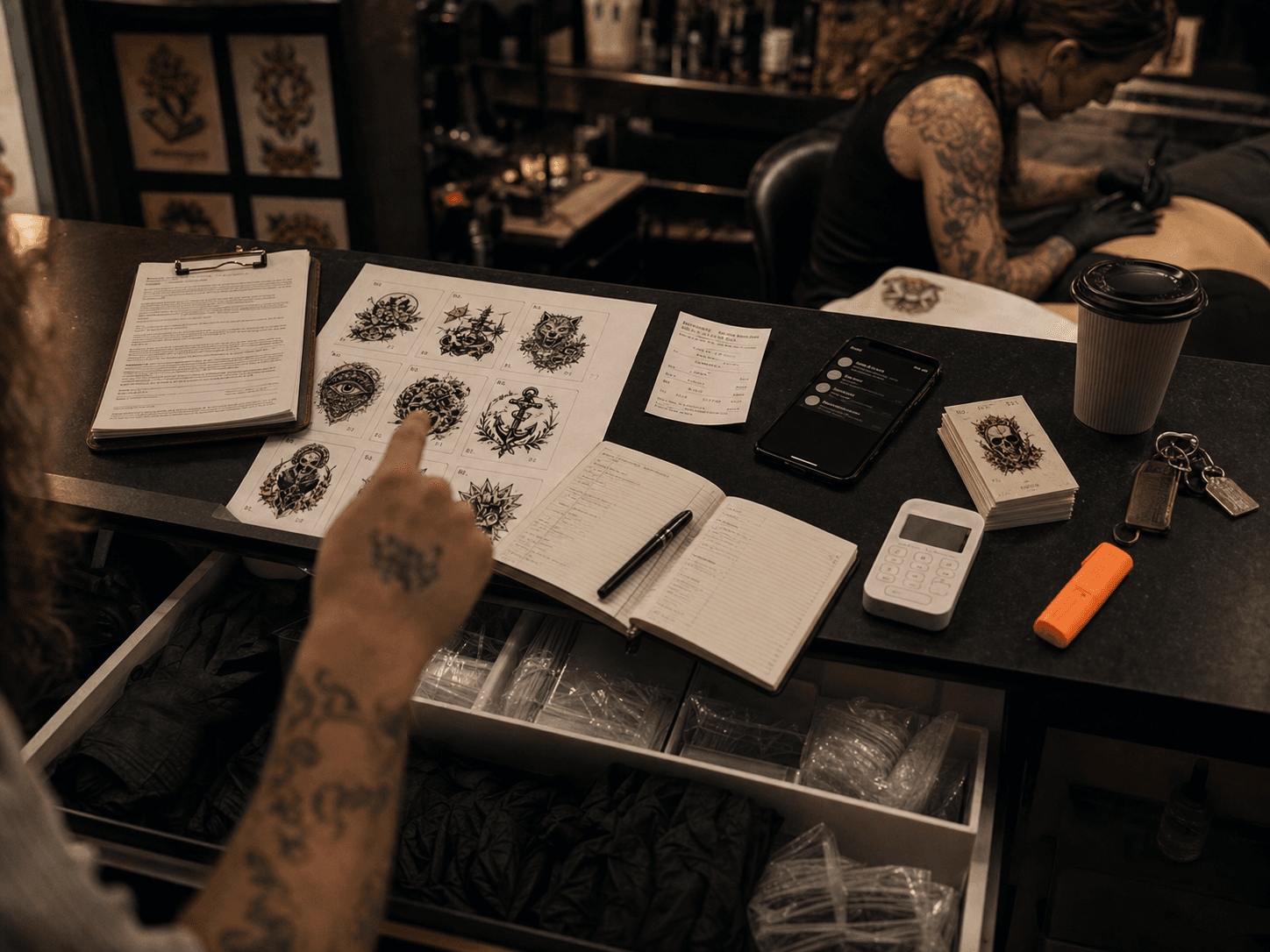
The front desk carries the quiet pressure of a working shop: intake, deposits, consent, calls, walk ins, and the next client waiting to be understood.
Shop life / May 22, 2026 / 7 min read
The Tattoo Shop Front Desk Is Where The Whole Room Shows Its Nerves
A tattoo shop front desk is the pressure point of the room: it protects artist focus, catches client details, keeps deposits and consent from drifting, and turns walk ins, regulars, guest artists, and nervous first timers into an actual shop flow.
More in Shop LifeEvery tattoo shop has a front desk, even the ones that swear they do not. Sometimes it is an actual counter with a person behind it. Sometimes it is a phone on a rolling tray, a notebook by the printer, a shared inbox, and one artist trying to answer six questions while a stencil dries.
A tattoo shop front desk is a filter, not furniture.
The desk is where the room decides what gets through. A serious booking request gets separated from a bored browser. A client who needs more prep gets slowed down before they waste an artist hour. A walk in with a realistic idea gets pointed to the right person. A no show becomes a record instead of a rumor.
That is why the front desk can feel calm when it is working and haunted when it is not. The same five questions keep looping. What is your budget? Where do you want it? Do you have references? Did you pay the deposit? Did you sign the form? The artist hears those questions all day if the desk does not catch them first.
In a good shop, the desk protects the artists from the wrong kind of interruption. In a messy shop, the desk becomes a forwarding address for chaos.
Walk ins and regulars need different kinds of attention.
The first timer at the door is usually asking two questions at once. Can this shop do the thing I want, and am I going to feel weird asking for it? The regular is asking something else. Do you remember how I like to book, who I work with, and what is already in motion?
Those two clients should not fall into the same pile. Walk ins need translation: style, placement, price range, timing, and whether today is even possible. Regulars need continuity: past work, open pieces, touch ups, preferred artist, and the tone of a relationship that already exists.
When the front desk can hold both realities, the room feels easier. When it cannot, every client becomes new again. That is exhausting for everyone.
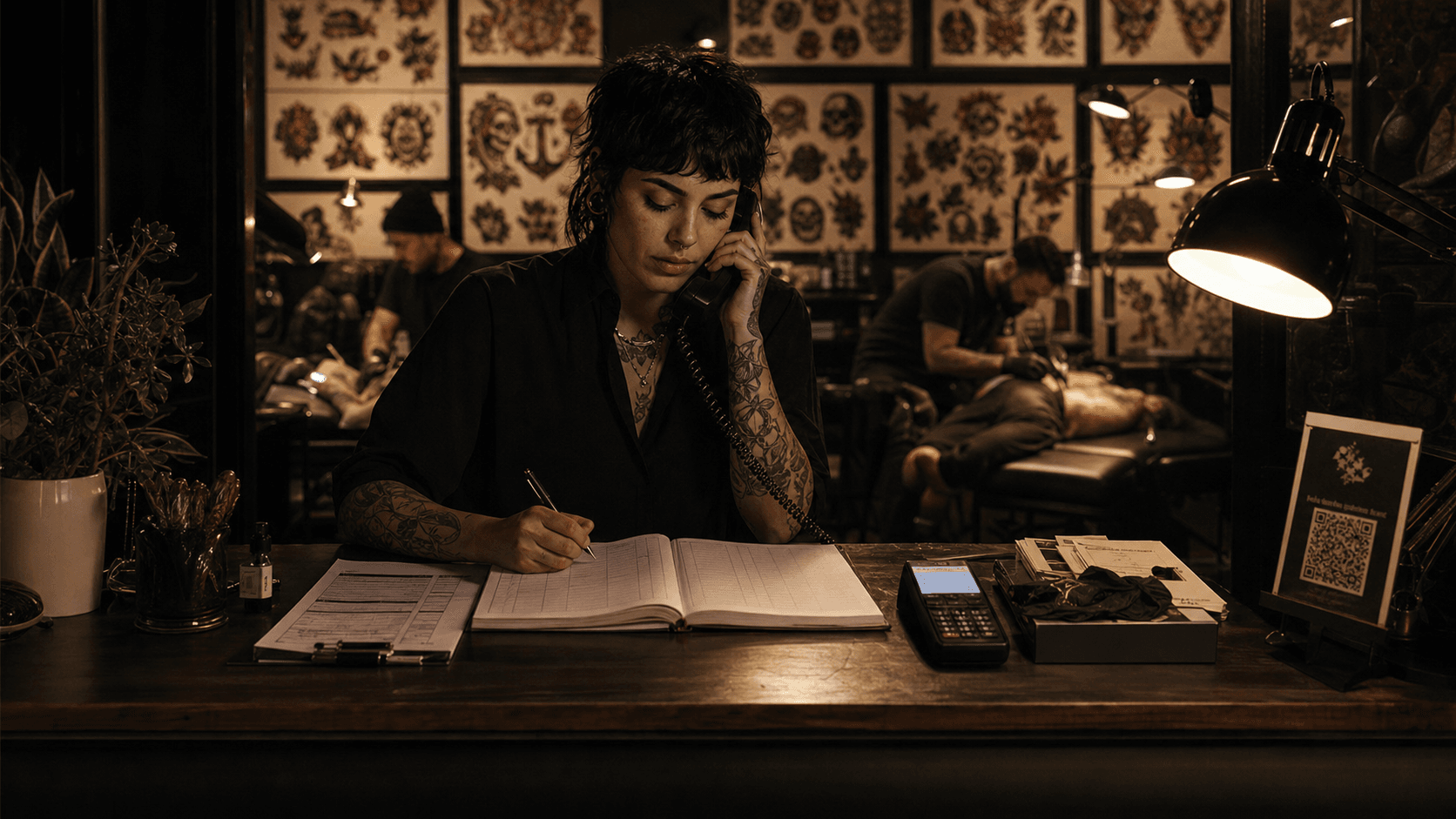
Deposits, consent, and memory are not the same system.
Tattoo shops run on trust, but trust is not a storage method. A deposit needs a record. A consent form needs a place to live. A client note needs more than “I think they said ribs.” A guest artist date needs more than a screenshot in somebody’s messages.
This is where front desk work gets underestimated. It is not only greeting people. It is keeping the small promises from slipping: the call back, the redraw note, the allergy question, the touch up window, the paid deposit, the design that should not be repeated, the client who asked to be contacted if a cancellation opens.
The same pressure shows up during event days too. A flash day can look fun from the outside while the desk is quietly holding the whole thing together: names, designs, prices, time estimates, payment status, consent, and who is next. That is why a good flash day flow starts before the room gets loud.
What the front desk is really sorting.
| Pressure | What it looks like | What a good desk protects |
|---|---|---|
| Walk ins | People asking if something can happen today. | Artist focus, realistic timing, clear price range, clean intake. |
| Deposits | Money paid, promised, transferred, or forgotten. | The booking slot, the client record, and the shop policy. |
| Consent | Forms, IDs, health context, placement, and client acknowledgement. | The client trail before the needle comes out. |
| No shows | Empty time, vague excuses, and last-minute holes. | The artist calendar and the follow up list. |
| Guest artists | Different books, rules, travel windows, and client expectations. | A clean handoff between the shop, artist, and client. |
| Regulars | Ongoing work, touch ups, preferred artists, and informal promises. | Continuity, memory, and relationship trust. |
The invisible labor is why the desk gets weird.
A lot of front desk work is emotional weather control. The client who is nervous but pretending not to be. The friend group getting loud. The person who wants a full back piece for the price of lunch. The artist who is running late and hates being interrupted. The regular who knows the shop too well. The guest artist who needs the Wi-Fi, stencil machine, release form, and coffee in the same five minutes.
None of that fits neatly into a calendar block. It is tone, timing, context, and memory. A good desk person can keep the room from turning sour without making a speech about it. They can say no without making it a fight. They can slow down a bad idea without embarrassing the client. They can make an artist look organized even when the day is trying to chew through the floor.
That kind of labor is easy to notice only when it disappears.
Private studios still have a front desk problem.
Private studios sometimes think they escaped the front desk because nobody is sitting at one. Usually they just moved the desk into the artist’s phone. The same questions still arrive. They just arrive between appointments, after dinner, during drawing time, and inside whatever social app the client used first.
That is why a tattoo booking calendar by itself is not enough. A time slot is only one part of the request. The shop still needs the idea, references, size, placement, budget, deposit rule, consent path, and follow up. Without that, the calendar only tells you when the confusion starts.
The modern front desk might be a person, a process, or a stack of tools. The shape matters less than the result: clients know what to do next, artists know what has been promised, and the shop does not depend on memory for things that should have records.
Sources and context
General front desk role context for greeting, scheduling, answering questions, and routing people. Tattoo shops add consent, deposits, artist fit, and client trust on top of that baseline.
Open sourceSafety context only. Tattoo shops should use their own local rules, training, and legal requirements for client records, consent, and exposure-control practices.
Open sourceUsed for broad client-safety context around tattoo questions and aftercare awareness, not as legal or medical advice.
Open sourceQuick answers
What does a tattoo shop front desk do?
A tattoo shop front desk usually handles client questions, walk ins, booking intake, deposits, consent status, artist schedules, touch up questions, guest artist logistics, and follow up so artists can stay focused on the work.
Does a private tattoo studio still need a front desk system?
Yes. Even without a physical desk, a private studio still needs a system for intake, deposits, client details, consent, payments, scheduling, and follow up.
Why is front desk workflow important in tattoo shops?
Front desk workflow protects artist time, reduces missed details, makes client expectations clearer, and keeps booking, deposits, consent, and follow up from living only in memory or DMs.
Should the front desk handle tattoo pricing?
The front desk can explain minimums, price ranges, deposit rules, and how quotes work, but final pricing usually depends on the artist, design, size, placement, and shop policy.
Magazine navigation
Move through the archive

Have a shop update, convention note, artist story, or tattoo industry tip Bzzz.ink should cover?
Send it to Bzzz.ink Mag