
Tattoo business / May 21, 2026 / 8 min read
How To Run A Tattoo Flash Day Without Turning The Shop Into Chaos
How to run a tattoo flash day comes down to one clear offer, visible prices, firm rules, a simple line system, and a follow up path for everyone who likes the work but cannot get tattooed that day.

Direct answer
A flash day should be simple enough to run while the room is loud.
A flash day should feel alive, but it should not run on panic. The room can be loud, the wall can be packed, and the line can still move clean if the artist decides the offer, the rules, the payment path, and the follow up before the first client walks in.
01 / The offer
How to run a tattoo flash day starts with the offer.
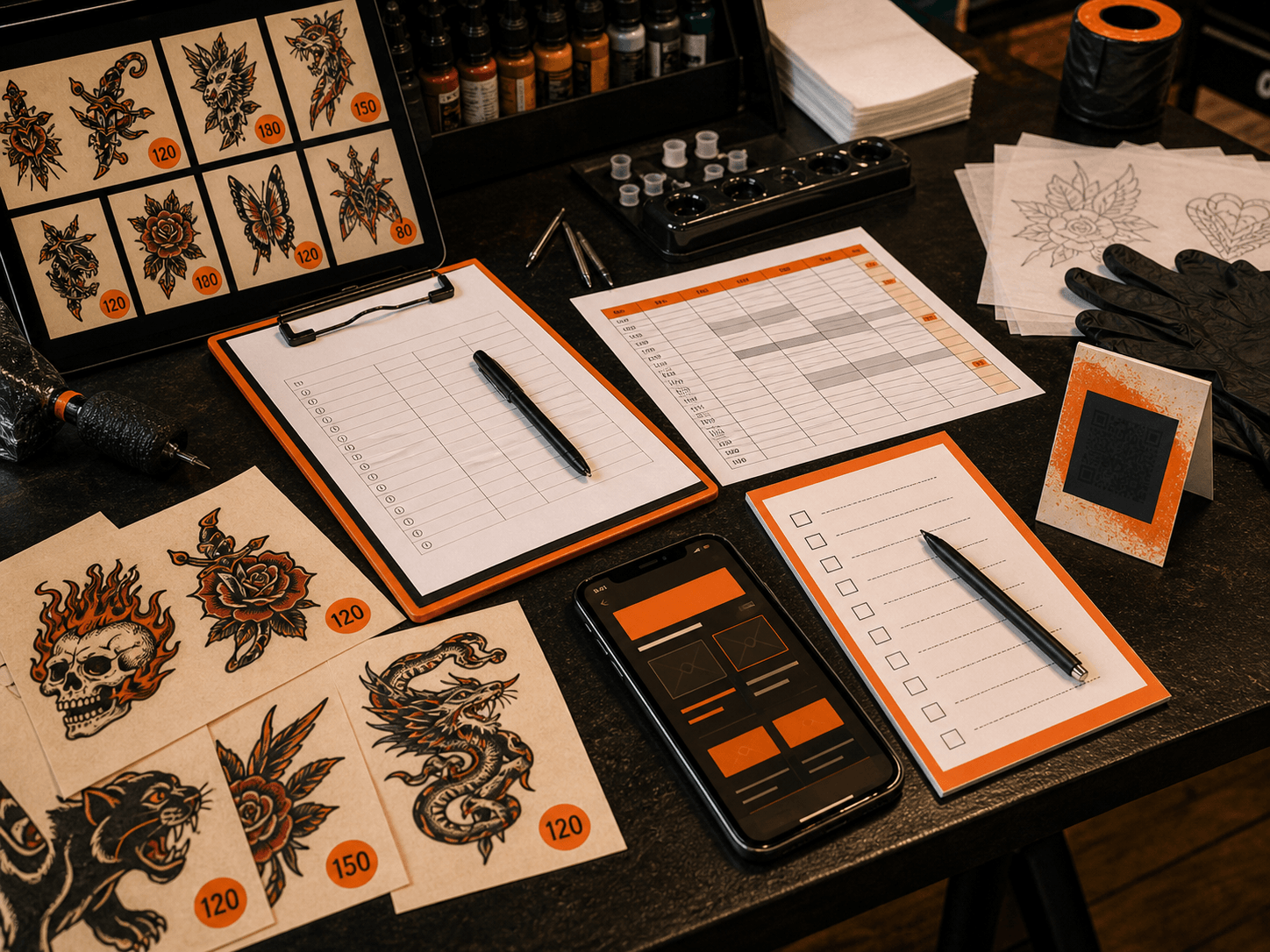
The first decision is not the poster. It is the offer. Are you running small repeatable pieces, one day only designs, discounted apprentice flash, a charity sheet, a style theme, a Friday the 13th board, a walk in event, or a booked flash drop with deposits?
Those are different days. A walk in day needs line control. A booked drop needs appointment slots. A charity day needs a clean payment and donation story. A flash sheet release needs usage rules. If the offer is fuzzy, every client question becomes a custom negotiation and the day starts leaking time before it starts making money.
For artists who already use social to build demand, the cleanest move is to point the post to a real page. That page can show what is available, what is sold, how to request a piece, and how to buy prints or digital products after the event. That is the same reason a tattoo artist link in bio matters before the room gets busy.
Guide note
Set the rules before the post goes live.
A flash day post should not create fifty tiny negotiations. Put the size range, price range, repeat rules, deposit rule, time window, location, and claim process in place before the first person asks if a design is still available.
Clear rules do not make the day less fun. They make the day easier to say yes to. Clients want to know what it costs, how long it takes, whether the piece can be repeated, and what they need to do next.
02 / System
Flash day setup flow
Flash board
Theme, number of designs, size range, repeat rules, and sold status.
Clients can choose faster when the wall is not a guessing game.Pricing
Flat price, price bands, deposit amount, cash/card rules, and tip option.
Surprise pricing slows the line and makes the artist explain the same thing all day.Booking flow
Walk ins, booked slots, first come first served, or deposit claims.
The line needs a shape before people arrive.Client capture
Name, contact, design number, placement, consent status, and follow up permission.
Interested clients should not disappear just because the chair is full.After the event
Recap post, follow up, available leftovers, print sales, and next drop.
The day should keep working after the last chair is cleaned.03 / Pricing
Price the day so clients can move fast.
Flash days work better when the price is simple enough to understand at a glance. That can be one price for every design, three price bands, or a clear range by size. What does not work is making every person wait for a custom quote while the line stacks up.
Repeat rules matter just as much. Some artists repeat every flash design. Some sell each piece once. Some allow repeat designs only with changed placement, color, or size. Whatever the rule is, say it before the day starts.
If you plan to sell designs beyond the local event, separate tattoo appointments from digital flash sales. A local client may want the piece tattooed by you. Someone in another city may want to buy the design and take it to their own artist. That is why the how to sell tattoo flash online guide treats the buying path as its own product decision.
04 / Checklist
Flash day checklist
Pick the theme and limits
Choose the style, size range, color rules, placement limits, and whether designs are repeatable before you announce the day.
Make the next tap obvious
Send clients to a specific page, form, or product link. Do not make a busy flash day depend on a messy comment thread.
Capture people who cannot sit
Some people will love the work but miss the slot. Save their contact, offer leftovers, sell prints, or invite them to the next drop.
Plan the recap before the day ends
Shoot the wall, setup, stencil pulls, finished pieces, and leftover designs while the energy is real.
Note of the day
A packed room is not the same thing as a clean day.
Busy feels good until the artist is answering price questions, checking sold pieces, chasing consent, taking payments, and trying to tattoo at the same time. The smoother flash days are designed before they are busy.
Watch
Watch a flash event breakdown before you build your own.
Use the video for pacing, not as a script. Pay attention to how the offer is explained, how the day is framed, and what needs to be decided before people start asking for designs.
Watch on Tattooing 10106 / Day of
The day of flow should be boring on purpose.
The client flow should be easy to explain in ten seconds: pick a design, confirm the price, leave contact info, pay or hold the slot, sign what needs to be signed, wait for your turn, get tattooed, get aftercare, and know where to find the artist again.
If more than one artist is working, split the room by role. One person should know what is still available. One person should handle intake and payment. One person should know the time estimates. Even if everyone swaps roles during the day, the responsibilities need names.
Speed cannot be allowed to erase safety. The FDA tattoo safety guidance and CDC/NIOSH bloodborne disease guidance are dry reads, but the point matters in a flash room: clean station turnover, consent, aftercare, barriers, and client questions still need time even when the line is moving.
For shops, flash days also reveal why a tattoo appointment is more than a calendar slot. References, placement, budget, deposit, consent, notes, and follow up all matter. That is the same problem covered in the tattoo booking calendar guide.
07 / After
The money after the flash day is usually in the follow up.
A flash day can sell tattoos in the room, but the bigger value often shows up after. Someone who missed the line may book a custom piece. Someone who liked the sheet may buy a print. Someone who could not travel may buy a digital design. Someone who got tattooed may come back for a bigger project.
That only happens if the artist gives people a path. Post the leftovers. Email or message the people who asked about sold pieces. Offer a second date if demand was real. Turn the best sheet into a print. Save the photos. Make the next event easier because the first one taught you what people wanted.
A simple follow up list also tells you what to draw next. If people keep asking about a sold snake, a tiny reaper, or a colorway you almost did not post, that is demand showing itself. The next sheet does not have to be a guess.
The worst version of a flash day ends when the shop closes. The better version ends with a list, a recap, a few paid follow ups, and a clearer idea of what to draw next.
Sources
Start here
See how an artist page can connect booking requests, flash, shop products, tips, deposits, and client messages.
Open sourceUse this for current plan limits and platform fee language before running paid flash or shop products.
Open sourceOutside reference for how flash days are explained to artists and clients.
Open sourceWatch reference for flash event structure and pacing.
Open sourceAuthority source for tattoo safety and aftercare awareness.
Open sourceAuthority source for bloodborne pathogen risk awareness in body art work.
Open sourceFAQ
Flash day questions
What is a tattoo flash day?
A tattoo flash day is an event where an artist or shop offers a prepared set of tattoo designs, usually with clear prices, size limits, and a simpler booking or walk in process than custom work.
How do you run a tattoo flash day without chaos?
Decide the flash offer, prices, repeat rules, line system, deposit or payment process, client intake, consent flow, and follow up path before the event is announced.
Should flash day designs be repeatable?
That is an artist choice. Repeatable flash can earn more from one sheet, while one off flash can create urgency. The important part is making the rule clear before anyone pays.
Can a flash day sell products too?
Yes. Prints, stickers, zines, digital flash, aftercare, gift cards, and tips can give clients a way to support the artist even when they are not ready or able to get tattooed that day.
What should artists do after a flash day?
Post a recap, follow up with interested clients, share leftover designs, offer a second booking window if demand was strong, and save what sold so the next flash day is easier to plan.
Magazine navigation

05 / Client flow
Use social for the room, then move people to checkout.
Instagram, TikTok, and Facebook are good at making people notice the day. They are not always good at keeping the sale organized. Comments get buried. DMs split across accounts. Clients ask the same questions. Someone says they want a piece, then disappears when it is time to pay.
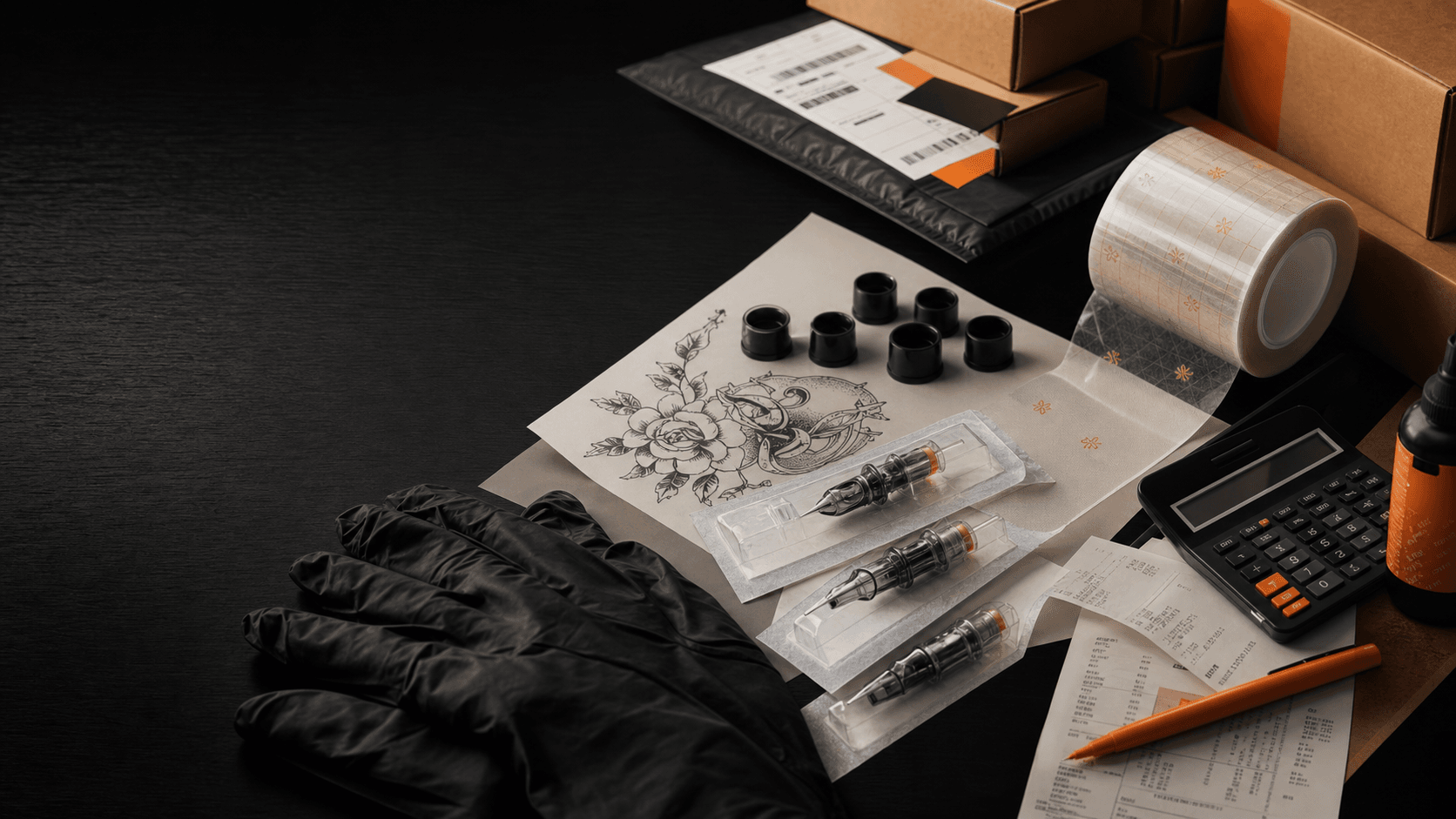
The post should create attention, but the link should do the work. Put the design numbers, rules, availability, deposit option, tip button, and shop products somewhere cleaner than a caption. One artist page can carry the booking request, the flash claim, the product shelf, and the client message without making you rebuild the same answer all day.
Do not overcomplicate the first run. One page, one QR code, one pinned comment, one story highlight, and one follow up message is enough to learn what clients actually do. You can get fancier after the first day shows you where people get stuck.